
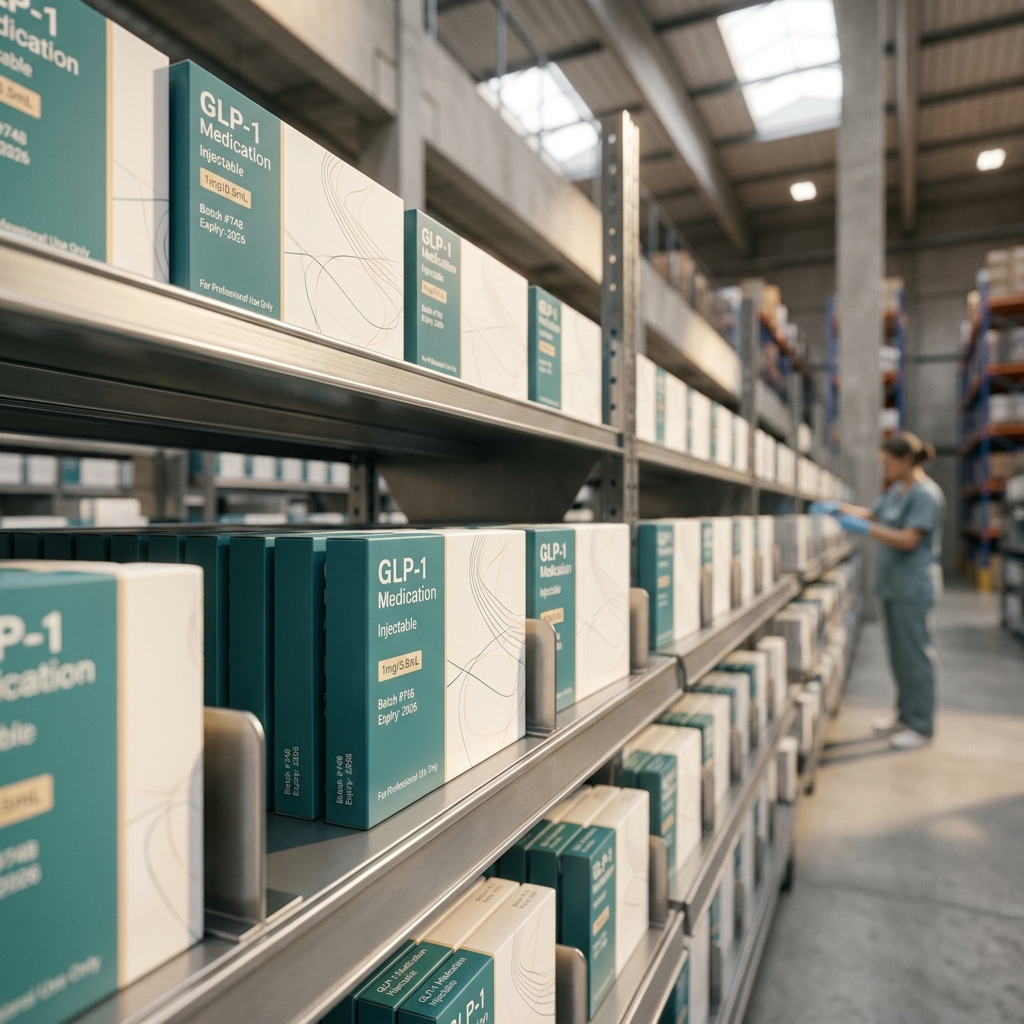
If you've been trying to start or stay on a GLP-1 medication like Ozempic, Wegovy, Mounjaro, or Zepbound, the rules changed in a way that surprised a lot of people. The years-long shortages that defined 2023 and 2024 are over — and that's precisely why access to cheaper compounded versions tightened in 2025. This page tracks where things actually stand right now, in plain language.
The short answer
As of mid-2026, none of the major GLP-1 medications are on the FDA's drug shortage list. Semaglutide (the active ingredient in Ozempic and Wegovy) and tirzepatide (Mounjaro and Zepbound) are both listed as available. Because those shortages have resolved, the large-scale compounding that filled the gap during the shortage is no longer permitted. Compounded GLP-1 medications haven't vanished entirely, but the legal basis for mass-producing them has, and that has reshaped the entire telehealth weight-loss market.
Confused about what's still available? Find out in 2 minutes.
A licensed provider reviews your health history and determines which GLP-1 treatment options are appropriate and available for you in 2026.
Check Your EligibilityCurrent status at a glance
| Medication | Ingredient | FDA shortage status | What it means |
|---|---|---|---|
| Ozempic / Wegovy | Semaglutide | ✓ Resolved | Brand supply stable; routine mass-compounding no longer allowed |
| Mounjaro / Zepbound | Tirzepatide | ✓ Resolved | Brand supply stable; routine mass-compounding no longer allowed |
| Oral semaglutide tablets | Semaglutide | ⟳ Transitioning | Manufacturing/product change, not a supply shortage |
Are GLP-1 medications still in shortage in 2026?

No. After more than two years of intermittent shortages driven by overwhelming demand, the FDA confirmed that supply had caught up. Tirzepatide came off the shortage list first, in late 2024. Injectable semaglutide followed in early 2025. The manufacturers expanded production capacity significantly, and the FDA's drug shortage database — the official source for this — now lists both ingredients as available rather than in shortage.
That doesn't mean every pharmacy has every dose on the shelf on any given day. Local, temporary stock gaps still happen, especially when a new dose strength rolls out. But a temporary gap at one pharmacy is very different from a national shortage, and it does not bring back the special rules that applied during the official shortage.
Why the end of the shortage triggered a "compounding ban"
This is the part that confuses most people, so it's worth slowing down.
During an official FDA shortage, compounding pharmacies are allowed to make their own versions of a drug that's in short supply. That exemption is what made low-cost compounded semaglutide and tirzepatide widely available through telehealth platforms — often for a fraction of the brand-name price. It was legal specifically because the brand-name product was hard to get.
When a drug comes off the shortage list, that exemption goes away. The FDA gave compounders a wind-down period in 2025 to stop producing the shortage-era versions, with separate deadlines for smaller state-licensed (503A) pharmacies and larger outsourcing (503B) facilities. Once those deadlines passed, routinely compounding semaglutide or tirzepatide simply to offer a cheaper alternative was no longer permitted.
So there was never a single dramatic "ban" announcement. What happened was quieter and more consequential: the shortages ended, the exemption expired, and the cheap-compounded-GLP-1 business model that had grown up around the shortage lost its legal footing almost overnight. For a deeper look, see our full FDA compounding ban breakdown.
Is compounded GLP-1 still available at all?

In limited circumstances, yes — but not the way it was during the shortage.
Traditional compounding still exists for situations where a licensed prescriber determines that a specific patient needs something the commercially available, FDA-approved product can't provide. A documented clinical need — for example, an ingredient the patient can't tolerate in the standard product — can justify a personalized compounded formulation for that individual. That is a narrow, prescriber-driven lane, not a path to mass-market discount injections.
What is no longer permitted is producing essentially identical copies of an available FDA-approved drug at scale just because they're cheaper. If a telehealth offer is still marketing bulk compounded semaglutide or tirzepatide as a routine budget alternative, that's worth scrutinizing carefully.
Not sure what's available to you?
A licensed provider can review your health history and tell you exactly which GLP-1 options — brand-name or otherwise — are appropriate and accessible in 2026.
Start Your Free EvaluationNo obligation — you only move forward if a provider determines you're a candidate.
Is Hims shutting down in 2026?
No — Hims & Hers, the telehealth company, is not shutting down. This search comes up a lot because the headlines around it were genuinely confusing.
What actually happened is tied directly to everything above. After the semaglutide shortage resolved in 2025, telehealth companies that had built large compounded-GLP-1 businesses had to change course. Novo Nordisk, the maker of Wegovy and Ozempic, publicly ended a short-lived partnership with Hims in 2025 over disagreements about the sale of compounded semaglutide. The result was a major shift in what these platforms could offer — a curtailing of compounded products, not a company shutdown. For a side-by-side comparison, see our Hims vs. Ro vs. Telehealth FX comparison.
If you previously got compounded semaglutide through a telehealth service and suddenly couldn't, this is almost always why.
What this means if you're trying to start or stay on a GLP-1
A few practical takeaways:
- The brand-name medications — Ozempic, Wegovy, Mounjaro, Zepbound — are the stable, FDA-approved options now that supply has recovered. Manufacturers also run their own savings programs and direct-purchase options that have made cash prices more competitive than they were at the peak of the shortage.
- If cost is your main concern, the conversation has shifted from "find compounded" to "find the most affordable route to an approved product, and confirm your eligibility." Whether a brand-name GLP-1, or in specific cases a legitimately compounded formulation, is appropriate for you is a clinical decision a licensed provider makes based on your health history.
- And be cautious with any offer that sounds like the shortage never ended. Deeply discounted "compounded GLP-1" marketed as a routine alternative is exactly the kind of thing the 2025 rule changes were meant to address. Know the red flags.
Looking at alternatives beyond injectables? Compare oral vs. injectable semaglutide or see how semaglutide compares to tirzepatide to find the right fit.
Frequently asked questions
Is there still an Ozempic shortage in 2026?
No. Semaglutide, the active ingredient in Ozempic and Wegovy, is no longer on the FDA drug shortage list. Individual pharmacies may occasionally be out of a specific dose, but there is no national shortage.
Is there still a Wegovy shortage in 2026?
No. Wegovy's active ingredient, semaglutide, is listed as available. The shortage that affected it in 2023 and 2024 resolved in early 2025.
Is there a Zepbound or Mounjaro shortage in 2026?
No. Tirzepatide, the active ingredient in both, came off the FDA shortage list in late 2024 and remains available.
Why can't I get compounded semaglutide anymore?
Compounded versions were widely available only because of the official shortage. Once semaglutide came off the shortage list in 2025, the exemption that allowed large-scale compounding expired, and routine compounding of it is no longer permitted.
Is compounded tirzepatide banned?
There was no single ban. Once tirzepatide's shortage resolved, the legal basis for compounding it at scale ended. Limited, prescriber-driven compounding for a documented individual clinical need can still exist, but mass-market compounded tirzepatide is no longer permitted.
Is Hims shutting down?
No. Hims & Hers is not closing. What changed is that, after the shortage ended, the company and others across the industry had to curtail their compounded GLP-1 offerings, and Novo Nordisk ended a partnership with the company in 2025.
Are compounded GLP-1 medications FDA-approved?
No. Compounded medications are not FDA-approved, and the FDA does not evaluate them for safety, effectiveness, or quality.
Find out what your options are — in about 2 minutes.
A licensed provider reviews your health history and determines which GLP-1 treatment plan is appropriate and available to you in 2026.
Check Your EligibilitySources
This page reflects the status shown in the FDA's official drug shortage database as of the last-updated date above. Shortage status can change; the database is the authoritative real-time source.
- U.S. Food and Drug Administration. (2026). FDA drug shortages database. dps.fda.gov/drugshortages
- U.S. Food and Drug Administration. (n.d.). Medications containing semaglutide marketed for type 2 diabetes or weight loss. fda.gov
Medical disclaimer: This page is for general informational purposes only and is not medical advice. It does not establish a provider-patient relationship. Treatment decisions are made only by a licensed medical provider based on your individual health history. Always consult a qualified healthcare professional before starting, stopping, or changing any medication.
Compounded-medication disclaimer: Compounded medications (including compounded semaglutide and tirzepatide) are not FDA-approved. The FDA does not evaluate compounded drugs for safety, effectiveness, or quality.
Affiliate disclaimer: Telehealth FX is an informational website. It is not a medical provider or pharmacy and does not provide medical advice, diagnosis, or treatment. We may earn a commission when you sign up for a partner's service through links on this site.
Trademark note: "Ozempic," "Wegovy," "Mounjaro," and "Zepbound" are the property of their respective owners. This page is not affiliated with, endorsed by, or sponsored by their manufacturers.