
One of the most profound and immediate changes men experience when starting Testosterone Replacement Therapy (TRT) is in the gym. The chronic fatigue lifts, the nagging joint pain often subsides, and the body's ability to partition nutrients and build muscle is restored to that of a 25-year-old.
However, TRT is not a magic steroid cycle. If you want to transform your body composition, you need to align your training and nutrition with your optimized hormonal environment. Here is how to maximize muscle growth and recovery once your levels are dialed in.
The Biology of Muscle Growth on TRT
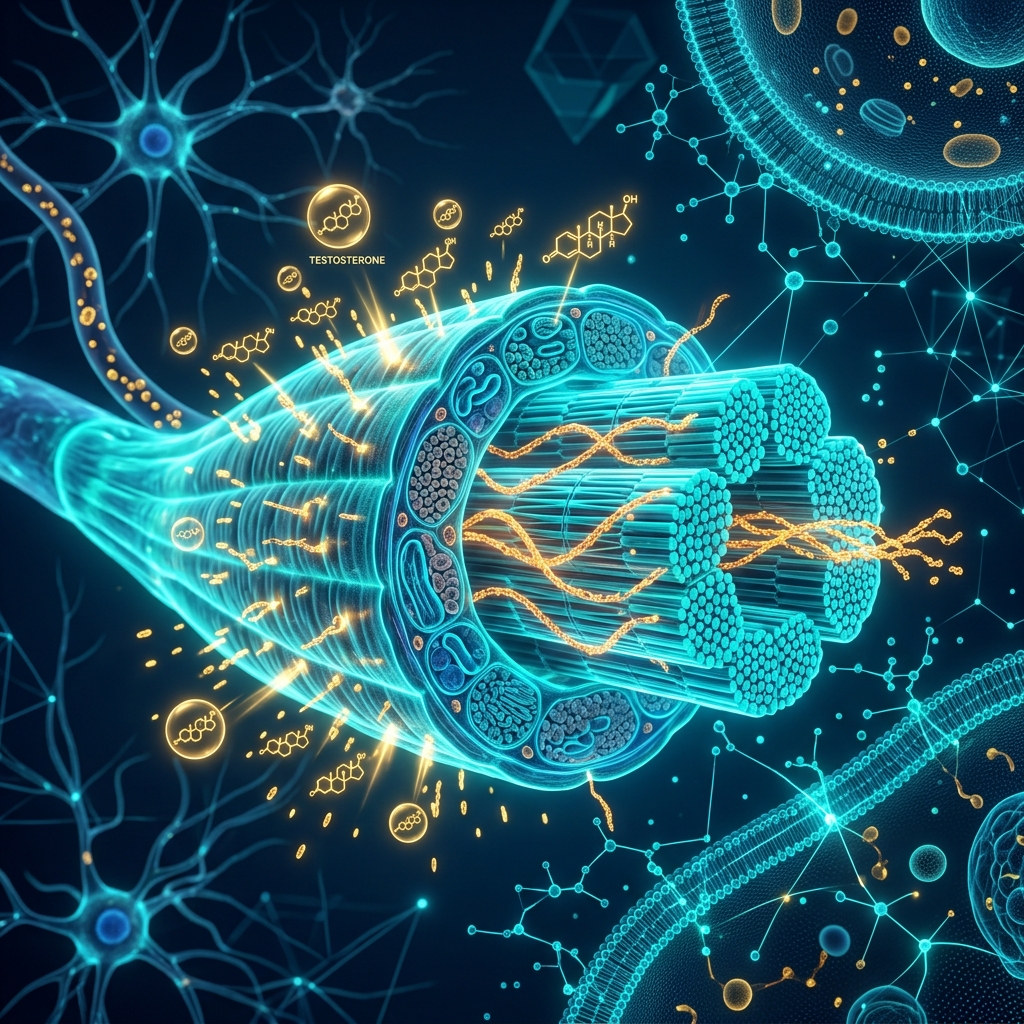
Testosterone is a highly anabolic hormone. It drives muscle growth primarily through increasing Muscle Protein Synthesis (MPS) and reducing protein breakdown. When you lift weights, you create micro-tears in the muscle fibers. Testosterone binds to androgen receptors in those muscle cells, signaling the body to repair the fibers thicker and stronger than before.
Men with hypogonadism (low T) are often in a catabolic state—they break down muscle faster than they can rebuild it, no matter how hard they train. TRT flips that switch, creating a perpetually anabolic environment.
Training Frequency and Volume
Because TRT vastly accelerates your recovery time, the training protocols that left you overtrained and exhausted when you had low T will suddenly feel manageable.
- Frequency: Most men on TRT find optimal results hitting each muscle group twice a week (e.g., an Upper/Lower split or Push/Pull/Legs). The "bro-split" of hitting a muscle once a week leaves too much growth potential on the table.
- Volume: You can handle more sets per session. While 10-12 hard working sets per muscle group per week is standard, men with optimized testosterone can push into the 15-20 set range safely.
- Intensity: You will notice increased strength and CNS drive. Train close to failure, but avoid training to failure on every single set to protect your joints as your strength outpaces your connective tissue adaptation.
The "Newbie Gains" Phenomenon
In the first 3 to 6 months of a clinical TRT protocol, many men experience a body recomposition phase reminiscent of their first year lifting weights. It is common to see rapid glycogen retention in the muscles (making them look fuller) and an increase in lean mass even while in a slight caloric deficit. Take advantage of this window by locking in your nutrition immediately.
Protein Requirements for Optimized Hormones
Your body is now a highly efficient muscle-building machine, but it still requires raw materials. If you don't feed the engine, the hormones can't do their job.
Aim for a minimum of 1 gram of protein per pound of target body weight per day. Because testosterone increases protein synthesis efficiency, you want a steady stream of amino acids in the bloodstream. Spread your protein intake across 4 to 5 meals rather than cramming it all into a massive post-workout shake.
Realistic Expectations (TRT vs. Bodybuilding Cycles)
It is crucial to manage expectations. Clinical TRT aims to keep your testosterone levels in the upper quadrant of the normal physiological range (e.g., 800 to 1100 ng/dL).
You will not build 30 pounds of tissue in three months like an IFBB pro on 2,000mg of synthetic androgens. You will build a dense, lean, athletic physique with consistent training, lower body fat, and vastly improved vitality without wrecking your cardiovascular system.
Unlock Your Physical Potential
Stop fighting your biology in the gym. Get your levels checked and optimized starting at $79/mo.
Start Your IntakeReferences
- Bhasin, S., et al. (1996). The effects of supraphysiologic doses of testosterone on muscle size and strength in normal men. The New England Journal of Medicine. nejm.org
- Sinha-Hikim, I., et al. (2002). Testosterone-induced increase in muscle size in healthy young men is associated with muscle fiber hypertrophy. American Journal of Physiology-Endocrinology and Metabolism. journals.physiology.org