
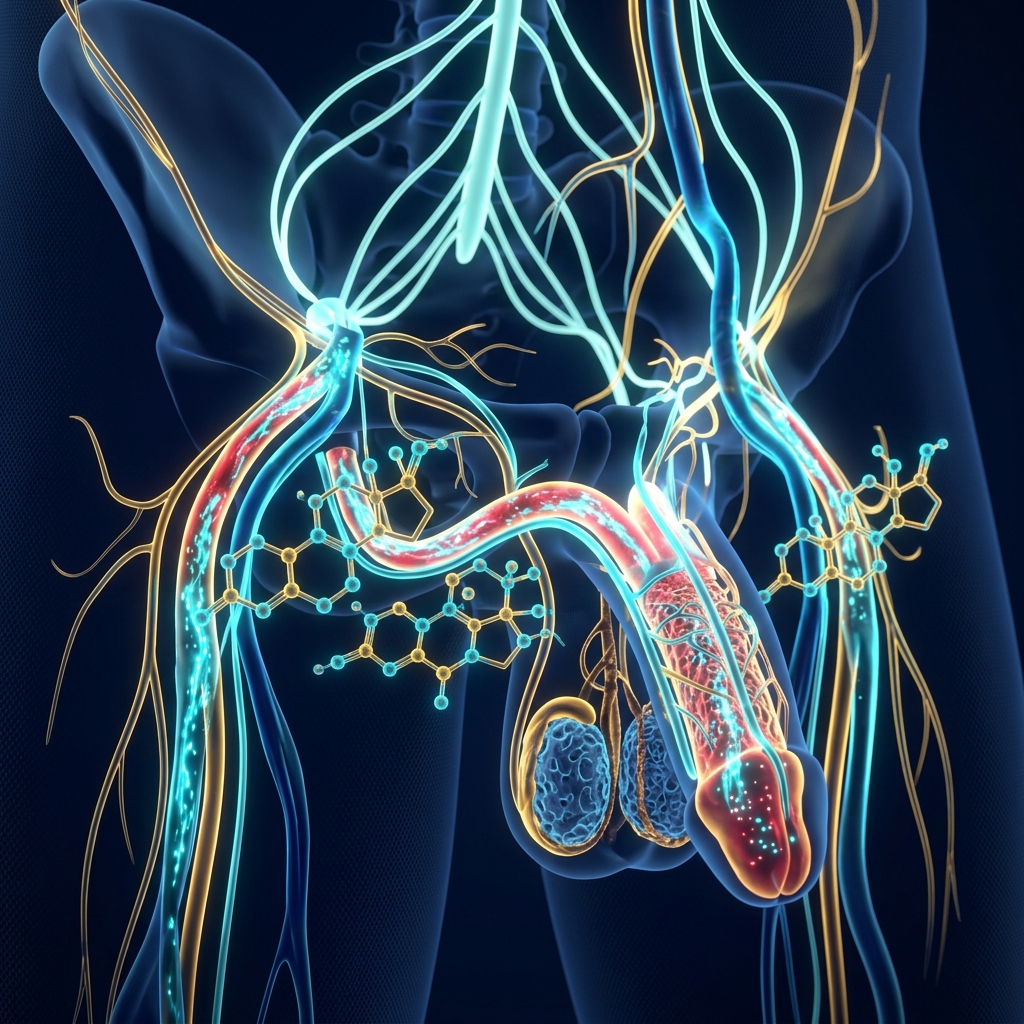
When a man experiences erectile dysfunction (ED), the immediate assumption is often that his testosterone levels have tanked. While testosterone plays a vital role in sexual function, ED is a complex mechanical process involving hormones, nerves, and blood vessels.
Taking sildenafil (Viagra) or tadalafil (Cialis) without addressing the underlying hormonal environment is like putting premium gas into a car with a broken starter. Here is the clinical breakdown of how low testosterone causes ED, and when a combination therapy is the optimal medical route.
The Mechanics: How Testosterone Triggers an Erection
Erections are ultimately a vascular event—blood flowing into the penis and getting trapped there. However, the trigger for that vascular event is neurological, and that neurology is dependent on testosterone.
When a man experiences sexual arousal, his brain sends signals down the spinal cord to the pelvic nerves. These nerves release nitric oxide (NO). Nitric oxide tells the blood vessels in the penis to relax and dilate, allowing blood to rush in.
Here is the catch: The enzyme that produces nitric oxide (Nitric Oxide Synthase) is highly dependent on testosterone. If your testosterone levels are clinically low, your body struggles to produce enough nitric oxide, regardless of how aroused you feel mentally.
Vascular ED vs. Hormonal ED
It is critical for a clinician to determine whether your ED is primarily vascular (plumbing) or hormonal (signaling).
Signs of Hormonal ED (Low Testosterone)
- Lack of morning or nocturnal erections (a key clinical indicator).
- Simultaneous crash in libido (you don't have the desire or the ability).
- Accompanied by fatigue, brain fog, or mood changes.
- PDE5 inhibitors (like Viagra) don't work well or at all.
Signs of Vascular ED
- Libido remains high, but you struggle to maintain firmness.
- Morning erections are still somewhat present.
- Underlying conditions like high blood pressure, diabetes, or high cholesterol are present.
- PDE5 inhibitors work exceptionally well.
When PDE5 Inhibitors Stop Working
Many men find that Cialis or Viagra work perfectly for a few years, and then slowly lose their efficacy. Why? Because PDE5 inhibitors rely on the presence of nitric oxide to work. If a man's testosterone levels are slowly declining year over year, his baseline nitric oxide production drops so low that the ED medication no longer has anything to amplify. TRT restores this baseline.
The Combination Protocol: TRT + Tadalafil
For many men, the most effective clinical protocol is combination therapy. By optimizing testosterone levels via TRT, the brain regains its libido, and the nerves regain their ability to synthesize nitric oxide.
Simultaneously, a low daily dose of Tadalafil (Cialis) keeps the vascular pathways wide open and improves overall endothelial health. This two-pronged approach addresses both the hormonal "starter" and the vascular "plumbing."
Fix the Root Cause of ED
Stop guessing. Get clinical lab work and an evidence-based TRT protocol starting at $79/mo.
See If You QualifyReferences
- Corona, G., et al. (2014). Testosterone supplementation and sexual function: a meta-analysis study. The Journal of Sexual Medicine. pubmed.ncbi.nlm.nih.gov
- Isidori, A. M., et al. (2005). Effects of testosterone on sexual function in men: results of a meta-analysis. Clinical Endocrinology. pubmed.ncbi.nlm.nih.gov